ENGINEERED FOR THE FRONTLINE. READY FOR EVERY SECOND.
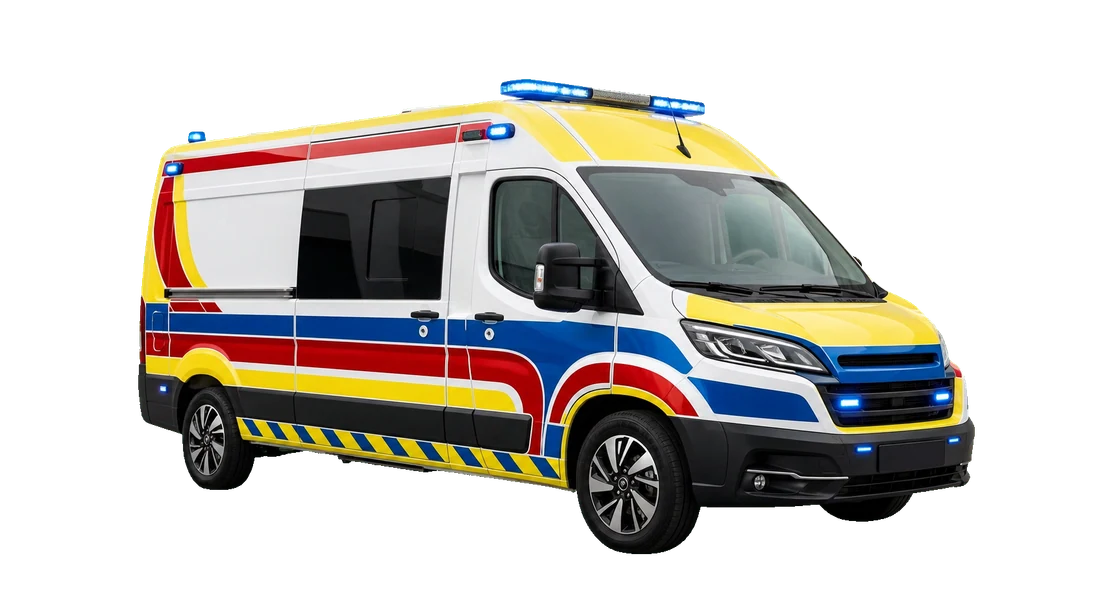
Certified emergency vehicle conversions compliant with European standard EN 1789:2020. Engineered on Mercedes-Benz Sprinter, MAN TGE, VW Crafter and Ford Transit chassis with verified 10G/20G dynamic crash testing.
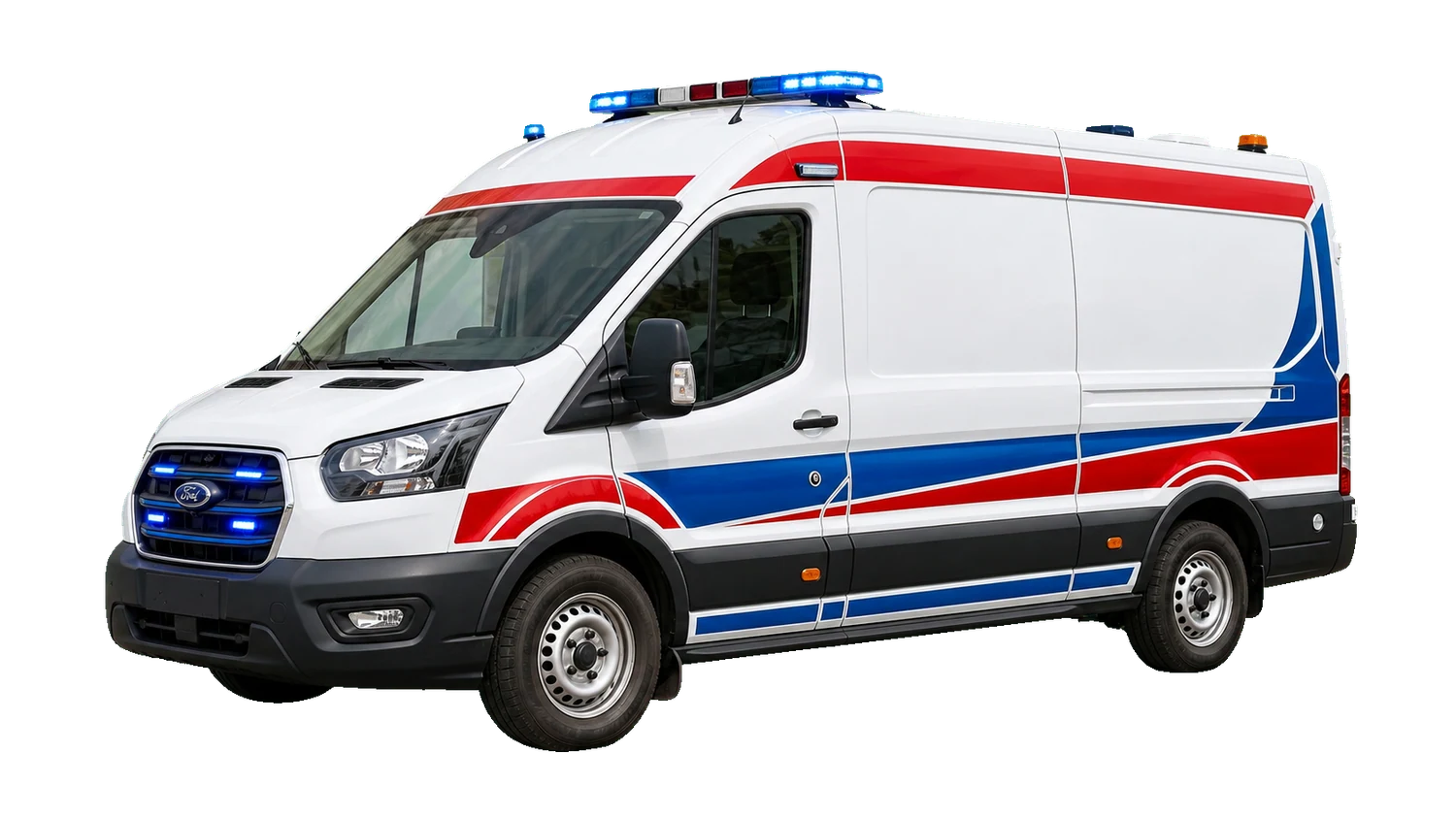
SAFE · EFFECTIVE · EFFICIENT
We engineer and coachbuild ambulances on three uncompromised pillars. Every technical solution must endure multi-axis crash forces, enable immediate clinical intervention and guarantee maximum fleet uptime.
10G / 20G Dynamically Tested
Highest occupant protection standards verified by multi-directional crash and sled testing.
- Full compliance with European standard EN 1789:2020 Type A1, A2, B, C
- Dynamic sled testing of stretcher, seats and medical mounts up to 20G
- Reinforced rollover cage architecture integrated into vehicle pillars
- Fire-retardant, non-toxic clinical grade interior materials (DIN 4102-B1)
Frontline Clinical Ergonomics
Interior architecture arranged around the crew: monitor, ventilator, suction and oxygen within immediate reach.
- 360-degree patient access while maintaining seated 3-point belt restraint
- Integrated DIN 13260 medical gas delivery with rapid shut-off valves
- Shadowless clinical LED lighting up to 1000 lux with blue/amber night-mode
- Modular DIN rails compatible with Zoll, Corpuls, Weinmann and Stryker mounts
Digital CAN-Bus & LiFePO4 Power
Intelligent power management and rapid decontamination minimizing off-road turnaround time.
- Digital CAN-bus switching system with dual touchscreen diagnostic interface
- Independent LiFePO4 energy bank with pure sine wave 230V and auto-eject shoreline
- Seamless thermoformed ABS composites resistant to hospital-grade disinfectants and UV-C
- Precision CNC modular cabinetry ensuring rapid field servicing and zero fleet downtime
ENGINEERED MODELS. MISSION READY.
Select an ambulance model to review compatible OEM chassis platforms, gross vehicle weights, medical gas setups and auxiliary electrical specs.
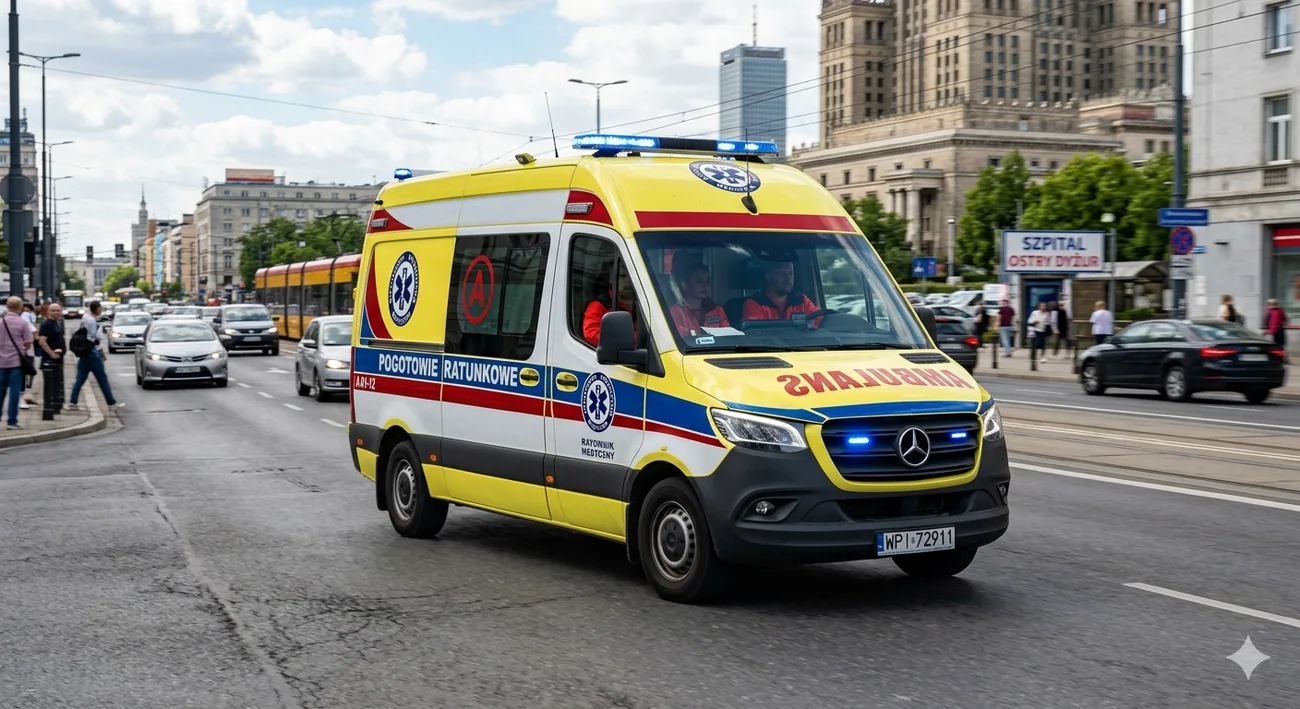

CABIN ERGONOMICS. EVERY SECOND COUNTS.
Inside an emergency ambulance, spatial architecture dictates intervention speed. Discover how H&S engineering integrates frontline paramedic ergonomics with patient safety.
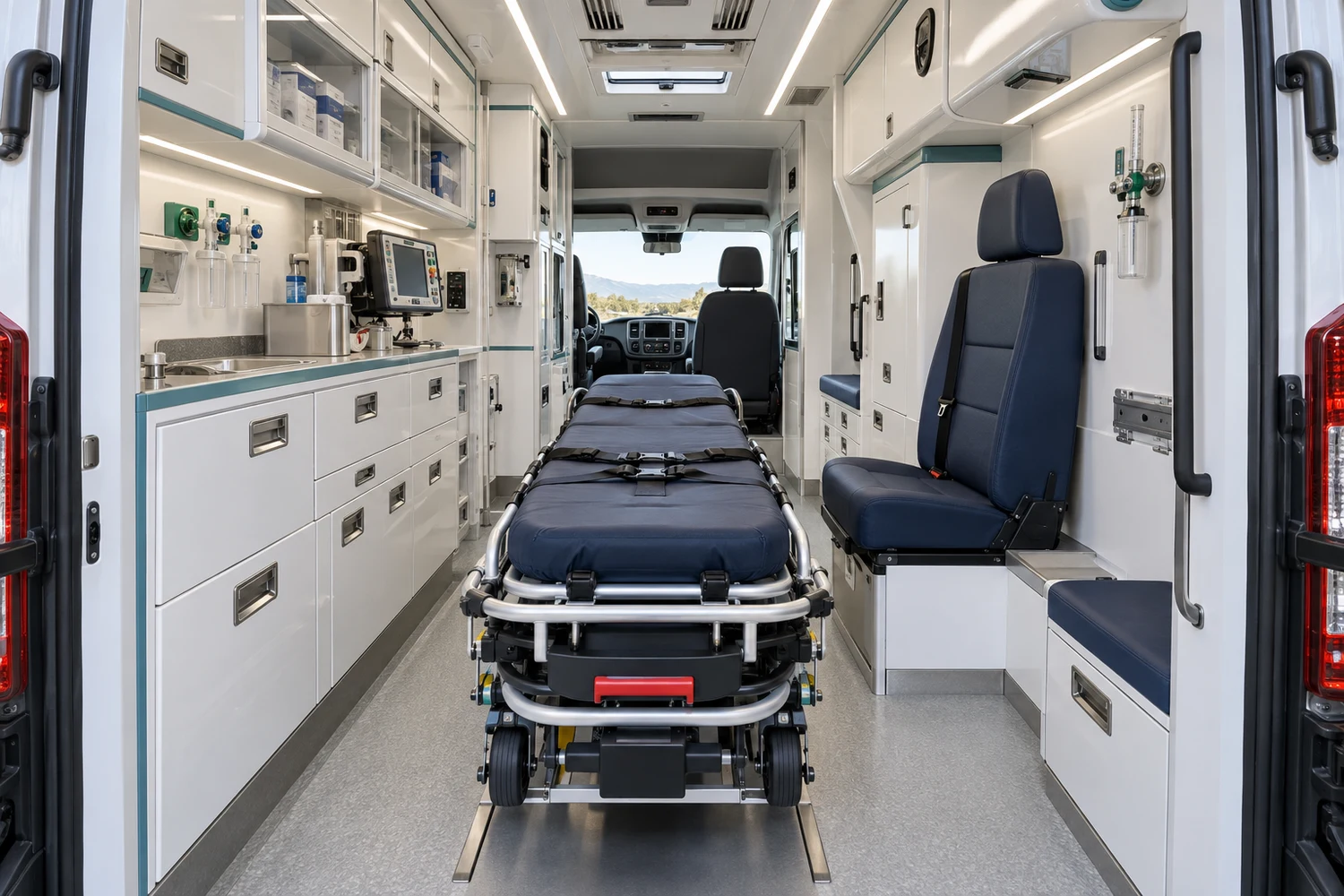
Sweep of Action Ergonomics
Cardiac monitor, ventilator, suction and DIN 13260 oxygen sockets positioned within immediate sweep of action while remaining 3-point seatbelt restrained.
Standalone LiFePO4 & CAN-Bus
200Ah LiFePO4 battery pack with 2000W pure sine inverter and shoreline auto-eject decoupling upon engine ignition.
10G/20G Hydro-Pneumatic Cot Platform
Crash-tested stretcher base with hydro-pneumatic shock isolation, Trendelenburg positioning and lateral travel for full 360° patient intervention.
Seamless Antimicrobial ABS Shell
Thermoformed seamless composite wall panels with zero dirt traps, fully impervious to hospital-grade disinfectants, UV-C irradiation and ozone decontamination.
OEM Chassis Builder Bases
Certifications & Crash Testing
EN 1789:2020 Compliance
Complete structural and clinical compliance for Type A1, A2, B and C ambulances.
10G/20G Dynamic Crash Tests
Dynamic crash deceleration testing of cot fasteners, seating, cabinet retention and medical gas cylinders.
2nd Stage European Type Approval
Certificate of Conformity allowing immediate vehicle registration across all EU member states.
ISO 9001:2015 Quality Management
Certified production, rigorous quality verification and systems integration for emergency vehicles.
ECE R65 / R10 EMC Compliant
360° emergency warning systems and electromagnetic compatibility shielding sensitive diagnostic tools.
Vehicles in Emergency & Medical Service
Every good project needs a clear path.
From defining the task to planning the handover. A framework for preparing a medical vehicle build.
Crew requirements
Define the vehicle’s tasks, seating, equipment and the users’ main expectations.
Conversion concept
Select a base vehicle and interior layout. Establish priorities and possible configuration options.
Project scope
Agree on systems, equipment and mounting arrangements, along with documentation and scheduling.
Verification plan
Define the requirements, configuration checks and documents needed for handover.
Handover preparation
Discuss handover conditions, operating instructions and the crew’s familiarisation requirements.
Frequently asked questions
Configuration, scheduling and the information needed to prepare a project.
Describe the vehicle’s role, seating and essential equipment. Add the preferred base vehicle, fleet size and target date. The form lets you collect this information in a TXT file.
Your crew. Your mission. Your ambulance.
Start by describing your needs. Choosing the vehicle and equipment comes next.