Engineering & Standards
Space for people who help.
Explore the principles behind H&S vehicle concepts: working ergonomics, organised equipment and a configuration shaped around the task.
Precision engineering built to save lives on the frontline.
H&S Sp. z o.o. based in Świebodzin, Poland, is an accredited coachbuilder of specialist medical and emergency rescue vehicles. From patient transport to advanced Type C mobile ICUs and bariatric ambulances, every vehicle is engineered to EN 1789:2020 European standards.
We partner directly with OEM chassis manufacturers (Mercedes-Benz Sprinter, MAN TGE, Volkswagen Crafter, Ford Transit), delivering complete second-stage EC Certificate of Conformity (WE CoC) type approvals ready for immediate frontline registration.
Explore models and specifications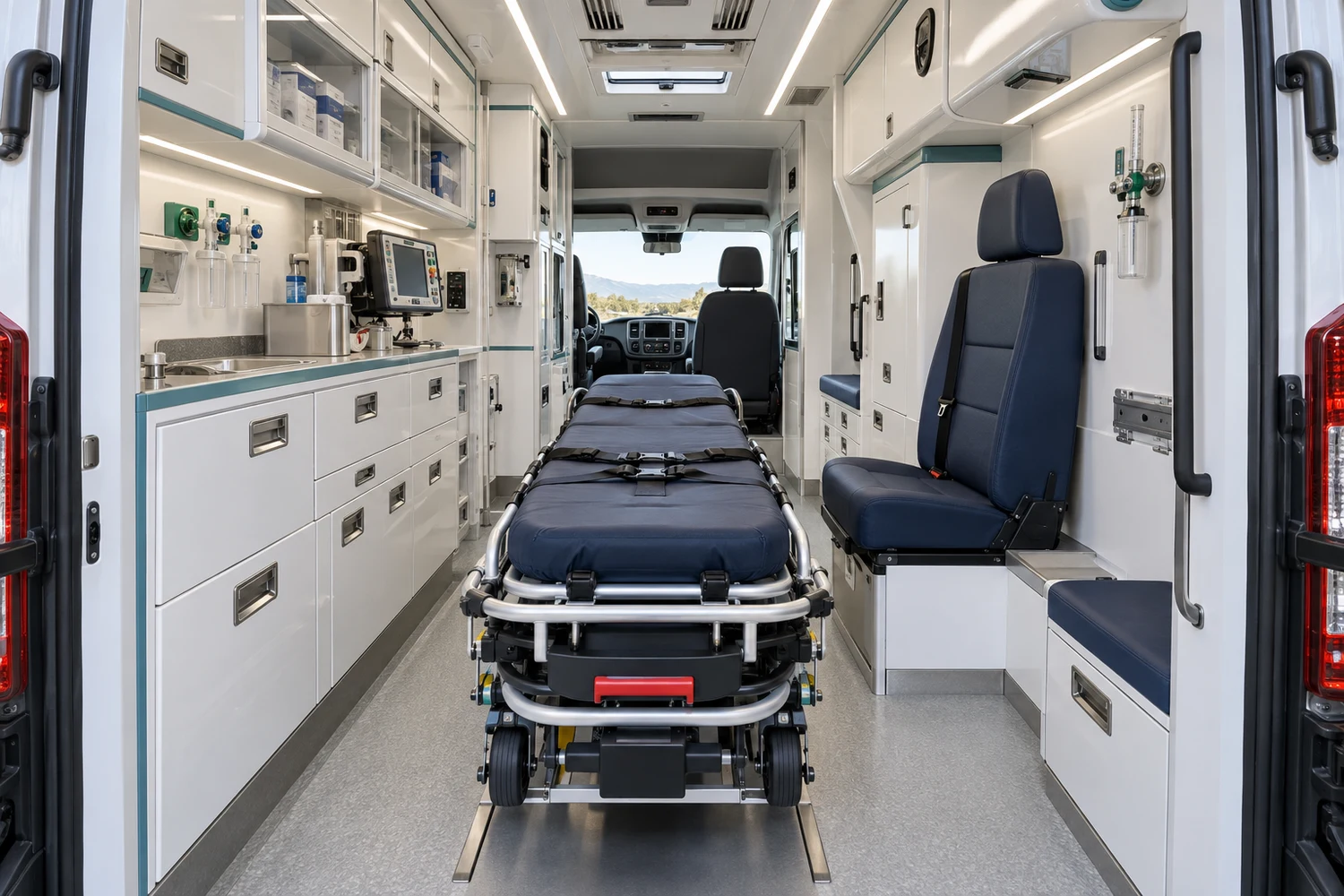
Three Core Ambulance Engineering Principles
Frontline Sweep of Action Ergonomics
Monitors, suction units and DIN 13260 oxygen outlets positioned within immediate arm reach of the seatbelt-restrained paramedic.
Composite Construction & 10G/20G Dynamic Testing
Thermoformed seamless ABS cabinetry and structural reinforcements fully compliant with EN 1789:2020 dynamic crash safety.
Dedicated CAN-Bus & LiFePO4 Electrical Core
Isolated secondary lithium energy storage with 230V pure sine wave inversion and auto-eject shoreline decouple system.
OEM Chassis Builder Bases
Certifications & Crash Testing
EN 1789:2020 Compliance
Complete structural and clinical compliance for Type A1, A2, B and C ambulances.
10G/20G Dynamic Crash Tests
Dynamic crash deceleration testing of cot fasteners, seating, cabinet retention and medical gas cylinders.
2nd Stage European Type Approval
Certificate of Conformity allowing immediate vehicle registration across all EU member states.
ISO 9001:2015 Quality Management
Certified production, rigorous quality verification and systems integration for emergency vehicles.
ECE R65 / R10 EMC Compliant
360° emergency warning systems and electromagnetic compatibility shielding sensitive diagnostic tools.
Every good project needs a clear path.
From defining the task to planning the handover. A framework for preparing a medical vehicle build.
Crew requirements
Define the vehicle’s tasks, seating, equipment and the users’ main expectations.
Conversion concept
Select a base vehicle and interior layout. Establish priorities and possible configuration options.
Project scope
Agree on systems, equipment and mounting arrangements, along with documentation and scheduling.
Verification plan
Define the requirements, configuration checks and documents needed for handover.
Handover preparation
Discuss handover conditions, operating instructions and the crew’s familiarisation requirements.
Your crew. Your mission. Your ambulance.
Start by describing your needs. Choosing the vehicle and equipment comes next.